
Andrea Massa

Andrea Massa (IEEE Fellow, IET Fellow, Electromagnetic Academy Fellow) has been a Full Professor of Electromagnetic Fields @ University of Trento since 2005. At present, Prof. Massa is the director of the network of federated laboratories “ELEDIA Research Center”. Moreover, he is holder of a Chang-Jiang Chair Professorship @ UESTC (Chengdu – China), Visiting Research Professor @ University of Illinois at Chicago (Chicago – USA), Distinguished Visiting Professor @ Tsinghua (Beijing – China), Visiting Professor
and IAS Distinguished Scholar @ Tel Aviv University (Tel Aviv – Israel). He has been holder of the Senior DIGITEO Chair at L2S-CentraleSupélec and CEA LIST in Saclay (France) and the UC3M-Santander Chair of Excellence @ Universidad Carlos III de Madrid (Spain). His research activities are mainly concerned with inverse problems, antenna synthesis, radar systems and signal processing, cross-layer optimization and planning of wireless systems, system-by-design and material-by-design (meta-materials and reconfigurable-materials), and theory/applications of optimization techniques to engineering problems (coms, medicine, and biology).
Keynote Speech: AI-Based Methods for Next-Generation Wireless Communications – A Physical-Layer
Perspective
Brief Abstract: The relentless demand for ubiquitous, high-capacity, and ultra-reliable connectivity
is driving the evolution towards next-generation wireless systems (e.g., 6G). These systems envision unprecedented performance metrics: terabit-per-second data rates, sub-millisecond latency, near-perfect reliability, and massive connectivity for billions of devices. Realizing this vision presents formidable challenges at the physical layer, including extreme spectral and energy efficiency, combating complex interference in dense networks, and managing highly dynamic channels at new spectrum bands (e.g., mmWave and THz). Traditional model-based signal processing and communication theories, while
foundational, are increasingly struggling with this complexity, often relying on oversimplified models and inflexible algorithms. In this context, Artificial Intelligence (AI), and particularly Machine Learning (ML)
and Optimization, has emerged as a transformative paradigm for physical-layer design. AI-based methods offer the potential to learn optimal communication strategies directly from data, bypassing intractable mathematical derivations and adapting to real-world, non-linear impairments. This abstract explores key AI applications from a physical-layer perspective.
George Karagiannidis
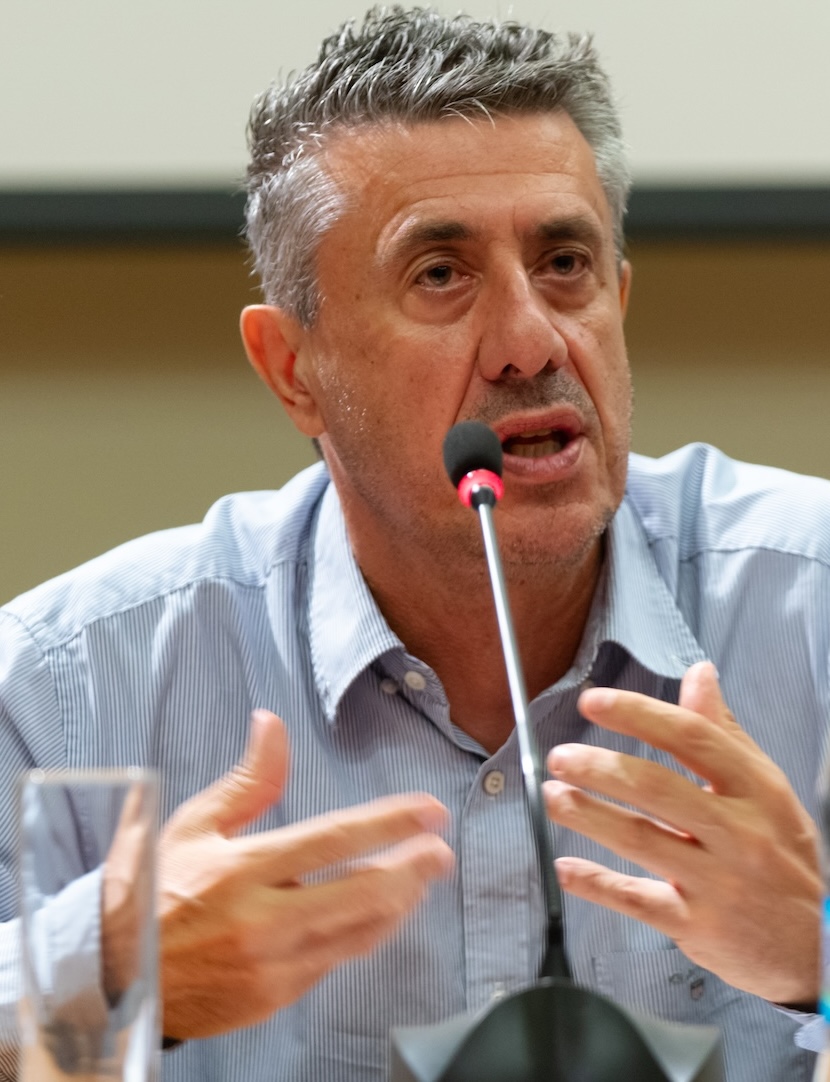
George Karagiannidis (IEEE Fellow) received the Ph.D. degree in Telecommunications Engineering from Electrical Engineering Department, University of Patras, Greece, in 1998. He is currently a Professor with the Electrical and Computer Engineering Department, Aristotle University of Thessaloniki, Thessaloniki, Greece, and the Head of Wireless Communications and Information Processing (WCIP) Group. His research interests are in the areas of wireless communications systems and networks and signal processing.
Dr. Karagiannidis has received three prestigious awards: The 2021 IEEE ComSoc RCC Technical Recognition Award, the 2018 IEEE ComSoc SPCE Technical Recognition Award, and the 2022 Humboldt Research Award from Alexander von Humboldt Foundation. He is one of the Highly Cited Authors across all areas of Electrical Engineering, recognized from Clarivate Analytics as the Web-of-Science Highly-Cited Researcher in the ten consecutive years 2015–2024. Currently, he is the Editor-in Chief of IEEE Transactions on Communications and in the past was the Editor-in Chief of IEEE Communications Letters.
Keynote Speech: GNN-Based Architectures for Modeling and Optimizing Wireless Networks
Brief Abstract: Graph neural networks (GNNs) have emerged as a powerful framework for leveraging deep learning (DL) to transform resource allocation in wireless networks. These models excel at capturing the structural properties of graphs that represent wireless networks, enabling them to adapt to dynamic channel state information and evolving network topologies. This talk provides a comprehensive exploration of GNN applications in optimizing wireless networks by addressing three core questions: (1) How can wireless network system parameters be effectively incorporated into GNNs? (2) How can the representational power of GNNs be enhanced? (3) How should the performance of GNNs be assessed in this context? Finally, an example of the use GNN in Pinching Antenna systems will be presented.
John N. Sahalos
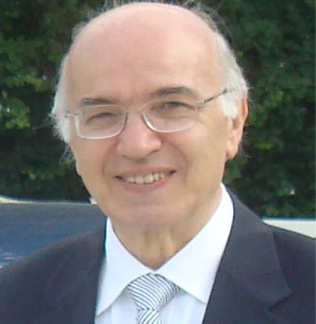
John N. Sahalos received the B.Sc. degree in physics, the M.Sc. and Ph.D. degree in electronic physics, and the B.C.E. and M.C.E. degrees in civil engineering from the AristotleUniversity of Thessaloniki (AUTH), Thessaloniki, Greece.
For eight years, he was a professor with the ECE Department, and the Director of the Microwaves Laboratory, University of Thrace, Xanthi, Greece. He was a Visiting Faculty Member with The Ohio State University, Columbus, OH, USA, the University of Colorado, Boulder, CO, USA, and the Technical University of Madrid, Madrid, Spain. He is currently with Radio-Communications Laboratory, AUTH, and with the Department of Engineering, University of Nicosia, UNIC, Nicosia, Cyprus.
He was in the Board of Directors of the National Research and Technology Committee of Greece and in the Board of Directors of OTE S.A., the largest Telecommunications Company in Southeast Europe. For more than ten years, he was the President of the Greek Committees of URSI. He has authored five books, two in English (Wiley and M&C Publishers), and of more than 450 articles published in the scientific literature. His research interests include antennas, radio-communications, EMC/ EMI, RFIDs, microwaves, and biomedical engineering.
Dr. Sahalos, with his colleagues, designed the innovative electrical impedance tomography (EIT), the microwave landing system (MLS), the ORAMA simulator, and the EM radiation knowledge (SMS-K) monitoring system. Except of his academic duties, he is currently the R&D Director with a High-Tech Industry. He is an IEEE Life Fellow, an Honorary Fellow of the Electronic Physics Society, a fellow of the Physical Society, and a member of the Technical Chamber of Greece.
Keynote Speech: “Antenna Design Techniques for the Upcoming Wireless Systems“
Brief Abstract: Antenna design techniques for the upcoming wireless systems are presented. Mean Square Error (MSE), plus linear and non-linear constraints in conjunction with Lagrange and perturbation techniques are given. Also, machine/ deep learning-based beamforming techniques for massive MIMO systems are presented.
Ioannis Pitas
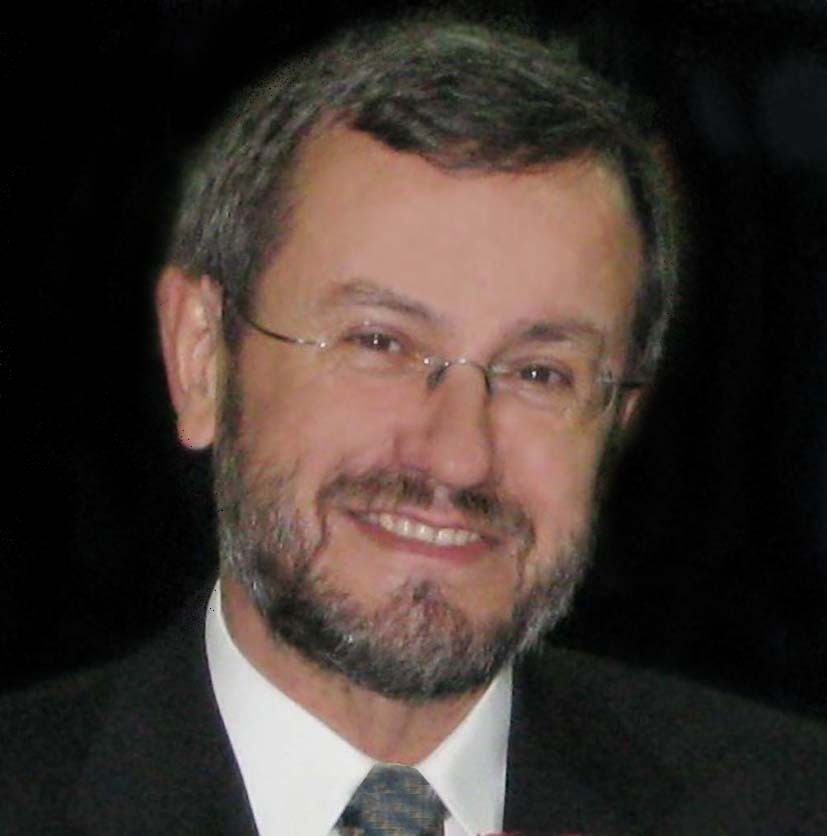
Ioannis Pitas (IEEE fellow, IEEE Distinguished Lecturer, EURASIP fellow) received the Diploma and PhD degree in Electrical Engineering, both from the Aristotle University of Thessaloniki (AUTH), Greece. He is Principal Researcher at AUTH and CERTH/ITI. In the period 1994-2025, he has been a Professor at the Department of Informatics of AUTH. He has been Director of the Artificial Intelligence and Information Analysis (AIIA) lab (1999-2025). He has served as a Visiting Professor at several Universities. He is Principal Researcher in AUTH and CERTH/ITI.
His current interests are in the areas of computer vision, machine learning, autonomous systems, intelligent digital media, image/video processing, human-centred computing, affective computing, 3D imaging and biomedical imaging. He has published over 980 papers, contributed to 48 books in his areas of interest and edited or (co-)authored another 16 books. He has also been member of the program committee of many scientific conferences and workshops. In the past he served as Associate Editor or co-Editor of 23 international journals and General or Technical Chair of 5 international conferences. He delivered 171 keynote/invited speeches worldwide. He co-organized 38 conferences and participated in technical committees of 291 conferences. He participated in 75+ R&D projects, primarily funded by the European Union and is/was principal investigator in 47 such projects. He is the coordinator of the Horizon Europe R&D project TEMA ( https://tema-project.eu/).
He is chair of the International AI Doctoral Academy (AIDA) https://www.i-aida.org/. He was chair and initiator of the IEEE Autonomous Systems Initiative https://ieeeasi.signalprocessingsociety.org/. He has 39400+ citations to his work and h-index 94. According to https://research.com/ he is ranked first in Greece and 319 worldwide in the field of Computer Science (2022).
Keynote Speech: “Decentralized Machine Learning for Natural Disaster Management“
Brief Abstract: This lecture overviews decentralized and distributed DNN architectures and their implementation in cloud/edge environments. Big data analysis can be greatly facilitated if decentralized/distributed DNN architectures are employed that interact with each other for DNN training and/or inference using the human Teacher-Student education paradigm. A novel Learning-by-Education Node Community (LENC) framework is presented that facilitates communication and knowledge exchange among diverse Deep Neural Networks (DNN) agents, undertaking the role of a student or teacher DNN by offering or absorbing knowledge respectively. The framework enables efficient and effective knowledge transfer among participating DNN agents while enhancing their learning capabilities and fostering their collaboration among diverse networks. The proposed framework addresses the challenges of handling diverse training data distributions and the limitations of individual DNN agent learning abilities. The LENC framework ensures the exploitation of the best available teacher knowledge upon learning a new task and protects the DNN agents from catastrophic forgetting. The experiments demonstrate the LENC framework functionalities on multiple teacher-student learning techniques and their integration with lifelong learning. Our experiments manifest the LEMA framework’s ability to maximize the accuracy of all participating DNN agents in classification tasks by leveraging the collaborative knowledge of the framework. A LENC framework implementation in cloud/edge environments is also overviewed. Applications are presented in big visual data analysis tasks for Natural Disaster Management.